E-liquid: how to choose the right bottle
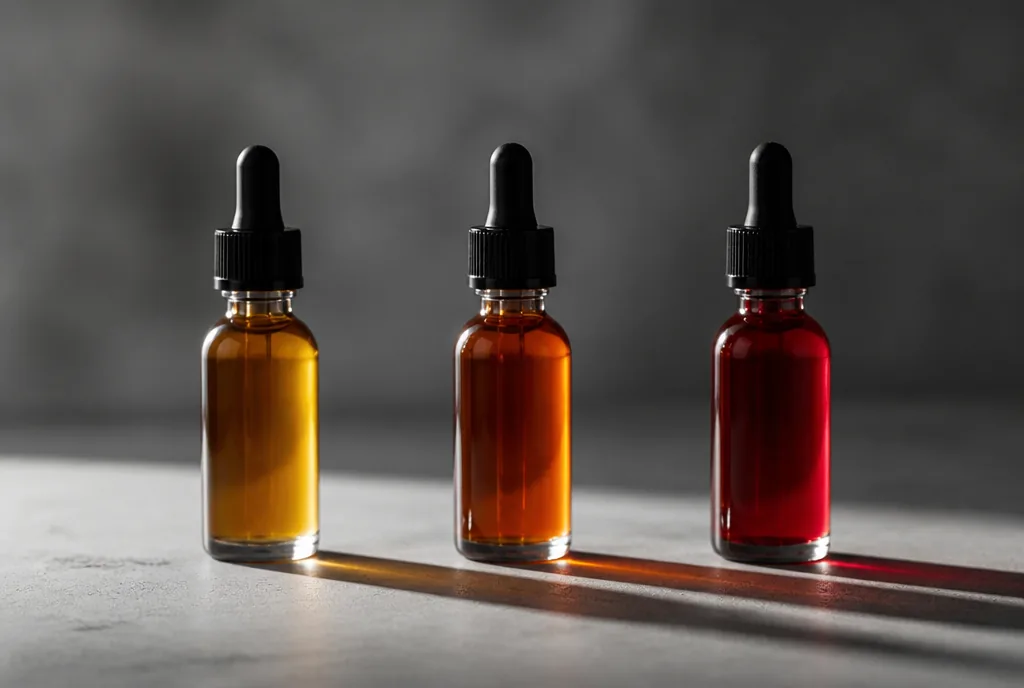
Two bottles side by side, same flavour, same shelf, and yet one will make your vape pleasant while the other stays flat and lifeless. An e-liquid is decided by two or three numbers printed small on the label, never by the name on the front. Most disappointing purchases start there. Here is how to read those numbers and settle the question in half a minute.
Which e-liquid to choose: the short answer
Take a 50/50 ratio with a strength matched to your own use if you vape a pod or any coil above 1 ohm, and a vegetable glycerine heavy blend, 70/30 or more, if your coil sits below 0.6 ohm.
That single criterion removes the vast majority of bad experiences. Everything else, flavour included, is corrected by buying a different bottle next time. A wrong ratio, on the other hand, gunks the coil or dries the wick within hours.
Reading a British e-liquid label in thirty seconds
Three pieces of information actually matter on a bottle sold in the UK, and they always sit in the same place. The rest is marketing. Get into the habit of checking them in this order, before you even look at the flavour name.
The PG/VG ratio comes first. Propylene glycol carries flavour and produces the throat hit. Vegetable glycerine thickens the liquid and creates vapour volume. A 50/50 bottle holds as much of one as the other, and the thicker the blend, the slower it wicks into a fine cotton bed.
The nicotine strength comes second, expressed in milligrams per millilitre. Under British rules inherited from the TPD, a nicotine containing e-liquid is capped at 20 mg/ml and sold in bottles of no more than 10 ml. Anything larger on the shelf is nicotine free by definition.
The third check is the ingredient list, the batch number and the manufacturer contact details. A bottle with none of those is a hard stop, whatever it costs and whoever is selling it.
Shortfills and nic shots, the British particularity
This is where the UK market diverges sharply from most of Europe, and where newcomers get confused fastest. Because the 10 ml cap applies only to nicotine containing bottles, larger bottles are sold deliberately underfilled and nicotine free.
A shortfill is exactly that: a bottle with headroom left at the top, into which you add one or more nicotine shots yourself. The shot is itself a 10 ml unit at the legal maximum, usually in a high glycerine base or in nic salt form.
The arithmetic matters more than the marketing. Adding one 10 ml shot at 20 mg/ml to a 50 ml shortfill gives 60 ml at roughly 3.3 mg/ml. Two shots into a 100 ml bottle land in the same region. Shake it properly and use it, since a ready mixed bottle needs no maturing.
The catch is that shortfills are almost always high VG, because they are built for sub ohm hardware. Pouring one into a pod with a high resistance coil is the single most common mismatch in British vaping.
Matching an e-liquid to your hardware
A bottle is never chosen in the abstract. It is chosen against a coil, and the ohm value printed on that coil dictates the ratio. Get it backwards and you pay for it immediately. If the hardware is not settled yet, start with how to choose a vape and come back to the bottle afterwards.
Pods and coils above 1 ohm run cool and pull liquid through a narrow wick. They want a fluid blend, so 50/50, occasionally a PG leaning 60/40. Nicotine salts stay comfortable at higher labelled strengths on this kind of setup, because the throat sensation is softer at equal figures.
Coils below 0.6 ohm run hot, drink fast and need material to work with. A 70/30 VG blend is the floor, and 80/20 makes sense on the hungriest builds. Putting a 50/50 in there gives a harsh vape and consumption that climbs with no gain in flavour.
Nic salts or freebase: settling it quickly
Nicotine salts are a different chemical form, gentler on the throat at the same labelled figure. They were designed for small, low power setups and for short, spaced out sessions.
Freebase nicotine, the traditional form, suits higher power builds and low figures. The working rule is simple: small pod, salts; large mod, freebase at a low figure.
One point rarely stated: mixing a salt bottle with a freebase bottle of the same flavour creates no technical problem, but makes the final strength impossible to estimate. Pick one camp per bottle and keep the label.
The reasoning behind a nicotine figure
No honest guide can hand you a number. There is no strength that is correct or safe in general, only a figure that suits one person on one piece of hardware, and the method matters far more than the answer.
Work from the hardware first. The same 12 mg/ml behaves completely differently on a tight pod and on a sub ohm tank, because the second delivers several times more vapour per second. That is why high figures live on small coils and low figures on large ones.
Then read your own two or three days of use rather than a table. A vape that turns harsh and scratchy in the throat is telling you the figure is too high for that setup. Reaching for the device constantly is telling you the opposite. Move one step at a time and give it forty eight hours before judging again.
Habits that ruin a perfectly good bottle
Some routines wreck a well matched e-liquid, and they come up in the same situations again and again.
- Firing a new coil without priming it first.
- Leaving a bottle open in direct sunlight, which speeds up oxidation and darkens it.
- Running two opposed flavours through the same tank with no rinse in between.
- Buying a large format of a flavour you have never tried.
- Shaking a nic salt bottle expecting a maturing period that does not exist.
The useful habit fits on one line: try a 10 ml before you commit to a big bottle.
Working out what your bottle really costs
The shelf figure tells you nothing on its own. The only comparable measure is cost per millilitre, so divide what you paid by the volume in the bottle. A shortfill you mix yourself and a ready to vape 10 ml only compare on that basis, once the shots are counted in.
Add your real weekly consumption, measured over a fortnight rather than guessed. That is the only way to know whether a change of ratio costs you more, since a build under 0.6 ohm gets through several times the volume of a pod.
The same calculation applies to coils, because a sweet bottle shortens their life noticeably. That connection is worked through in our guide on when to change a vape coil, and it changes the arithmetic more than the bottle price does.
Frequently asked questions
Is a bottle that darkens in the tank off?
No. Gradual browning is natural oxidation of the flavourings in contact with air and heat. The taste shifts, but the liquid remains usable while the date on the bottle holds.
Can I use any bottle in any brand of hardware?
Yes, there is no brand incompatibility. The only real constraint is the ohm value of the coil, which sets the ratio you need.
Should I let a bottle stand before vaping it?
Only for liquids you mix yourself from concentrates. A shop bottle is already stabilised at filling, and a shortfill needs shaking rather than steeping.
How long does an opened bottle keep?
Follow the date printed on it. Store it upright, closed, away from light and heat, which slows the drift in flavour considerably.
Does a higher nicotine figure produce less vapour?
Nicotine has no bearing on vapour volume, which comes from the ratio and the power. It only changes the throat sensation.
The habit to keep in front of the shelf
Look at the coil before the bottle. That reading order alone is enough to pick an e-liquid that matches your hardware, whatever the flavour on the label says. Note the ratio that worked and the figure that felt right, then rebuy on those two markers rather than on an offer.
Once that pairing is stable, the rest becomes pure tasting, and you can explore flavour families without risking a wasted bottle. If you are still at the very start, our guide to vaping for beginners covers the hardware side of the same decision.
Editorial content for adult readers only. Vaping products usually contain nicotine, a substance that causes addiction. Not for sale to under-18s in the United Kingdom. This article is not a buying recommendation.
Also on the site
Aspire PockeX: the guide to a good start
Aspire PockeX: what the Pocket AIO actually does, picking between the 0.6 and 1.2 ohm coil, the right bottle and a first fill without a burnt hit.
 02
02 How to choose a vape: four questions is enough
How to choose a vape without losing an evening: a four question decision tree, a verdict for each answer, and the traps to dodge in the shop.
 03
03 When to change your vape coil: the real signs
Forget the one to two week average: the four signals that say when to change your vape coil, and the method for measuring your own rhythm.