How to choose a vape: four questions is enough
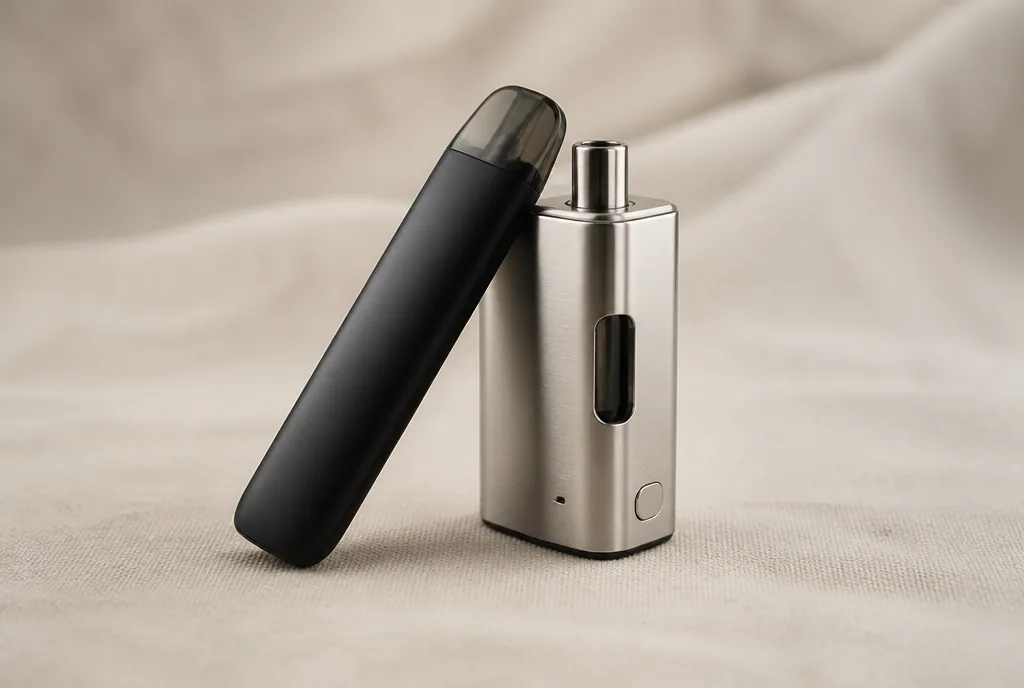
British buying guides stack up fifteen criteria and leave the reader exactly where they started. In practice, how to choose a vape comes down to four questions asked in the right order, each one removing a slice of the catalogue. This decision tree takes five minutes and hands you a precise family of hardware, not a shortlist of models to referee between.
How to choose a vape: the answer in four questions
Format, draw, battery life, appetite for settings. Answer those four in that order and one family of hardware is left standing, usually two or three models.
The order is the whole trick. Starting with settings, or with what you want to spend, produces an incoherent choice every time, because neither criterion narrows anything down until format and draw are fixed.
Question one: what format will you actually carry?
The hardware you buy has to fit the pocket you use every day. That apparently trivial test eliminates a large share of the British market on its own.
A compact pod slips anywhere and comes out one handed. A mod with a separate tank needs a dedicated pocket or a bag. If the device ends up staying at home because it is bulky, no other criterion carries any weight at all.
Verdict: shirt pocket or permanently on the move, take a pod. Bag every day and mostly sedentary, a mod is back on the table.
Question two: tight draw or airy draw?
The draw governs everything downstream: the coil, the bottle, the power. It is the most structural criterion and the one most often left until last, which is exactly backwards.
A tight draw, called mouth to lung in every British shop, is resistant, close to pulling on a narrow straw. It goes hand in hand with coils above 1 ohm and fluid 50/50 bottles. It is the draw that needs the least hardware and the least liquid, and virtually every modern pod offers it.
An airy draw, direct to lung, is a full open inhale with a large volume of vapour. It assumes low resistance coils, a generous battery and thick, high glycerine bottles. Consumption of both liquid and coils is markedly higher, so this choice is made deliberately rather than out of curiosity.
Given that refillable tanks sold in Britain hold 2 ml, the draw also decides how many times a day you refill. That single consequence surprises more new buyers than any other.
Question three: how long between charges?
Battery life is not read in milliamp hours alone but in the relationship between capacity and the power being drawn. The same cell lasts half as long on a low resistance build.
If you charge at home in the evening, a built in battery is fine. If you are out all day with no socket in reach, aim for a model with a removable cell and keep a charged spare in your bag.
Charging while vaping works on most recent models, but it is a rescue, not a substitute for adequate battery life.
One habit is worth adopting whichever route you take. Charge from a mains adapter of ordinary output rather than a very fast brick, and do it somewhere you can see the device rather than overnight beside the bed. Spare cells, when the model uses them, travel in a plastic case and never loose in a pocket with keys or coins.
Question four: do you want to adjust anything?
Three levels exist, and there is no shame in picking the first. The highest level only pays off for someone who genuinely uses it.
- No settings at all: the device applies the power suited to the coil it detects. Maximum simplicity.
- Wattage control: a slider in watts, to be set inside the range printed on the coil.
- Rebuildable: you fit the wire and the cotton yourself. Reserved for anyone happy to spend time on it.
One point guides rarely make: moving from an automatic device to an adjustable one only improves flavour if you actually sweep the power range and listen to the result. Without that work, the control is decorative.
How to choose a vape according to your profile
The four questions almost always land on one of three profiles. Here is what we recommend for each, without diplomatic hedging.
| Profile | Hardware indicated | Why |
|---|---|---|
| Discreet, sedentary, no settings wanted | Compact pod, built in battery, coil above 1 ohm | Total simplicity, contained liquid use, evening charging |
| Mobile daily use, some appetite for adjustment | Kit with removable cell, wattage control, adjustable draw | Extendable battery life, wide coil range, room to evolve |
| Chasing vapour volume, sedentary | Dual cell mod, low resistance coil, larger tank | The power and battery the airy draw actually requires |
The compact pod covers the widest range of situations by a distance. The dual cell mod only earns its place if the airy draw is a firm decision, since it commits you to a much higher spend on liquid and coils.
Between the two, the kit with a removable cell stays the most versatile option. It accepts either draw depending on the coil fitted, and it can be repaired part by part rather than replaced.
The invisible criterion: refill frequency
Nobody raises it at the counter, and it is what irritates people most after a month. Tank capacity, set against your daily consumption, determines how many times a day you stop to fill.
On a low resistance build, a 2 ml tank means three or four refills a day and a bottle permanently in your bag. The same tank on a pod running a tight draw comfortably lasts the day.
Estimate your consumption in millilitres over two or three days before buying, then compare it with the stated capacity. That simple ratio rules out models that look appealing on paper and become tiresome in practice.
Last minute traps
Once the family is identified, three checks prevent regret in the first week.
Check that the coils for the model are stocked by several British retailers and not only by the manufacturer. Check the real weight rather than the dimensions alone. Check finally that the bottle suited to the supplied coils matches what you already vape.
That last point deserves a minute of attention: the right e-liquid is chosen against the coil, never the other way round. If you want the same reasoning expressed as elimination criteria rather than a decision tree, our grid for the best e-cigarette covers the identical ground from the other end.
Frequently asked questions
Is it better to buy in a shop or online?
A shop lets you hold the hardware and judge the weight. Ordering online widens the choice of consumables. Many people do both: first purchase in person, restocking online.
Is a model released two years ago outdated?
No, and it often carries an advantage. Its coils are widely distributed and will stay available for a long time yet.
Do I need a backup device?
It is comfortable as soon as vaping is part of your routine. A simple pod kept charged in a drawer avoids days with no working option.
Are prefilled cartridge kits a good entry point?
They simplify things as far as possible, but they lock you into a narrow flavour catalogue and a high running cost. A refillable pod leaves far more room.
How do I know the draw suits me before buying?
Ask to draw on it dry in the shop, mouthpiece fitted. The resistance of the airflow registers immediately, with no liquid involved.
What comes after the decision
How to choose a vape becomes a simple question the moment you break it down: format, draw, battery life, settings. Answer in that order, verify that the coils are widely stocked, and the catalogue shrinks to two or three models that agree with each other.
The real work starts after the purchase, in tuning the bottle and tracking the consumables. That is where long term comfort is decided, and our guide on when to change a vape coil picks up exactly where this one stops. Keep the four questions somewhere, because they will still be valid the next time you choose a vape.
Editorial content for adult readers only. Vaping products usually contain nicotine, a substance that causes addiction. Not for sale to under-18s in the United Kingdom. This article is not a buying recommendation.
Also on the site
Aspire PockeX: the guide to a good start
Aspire PockeX: what the Pocket AIO actually does, picking between the 0.6 and 1.2 ohm coil, the right bottle and a first fill without a burnt hit.
 02
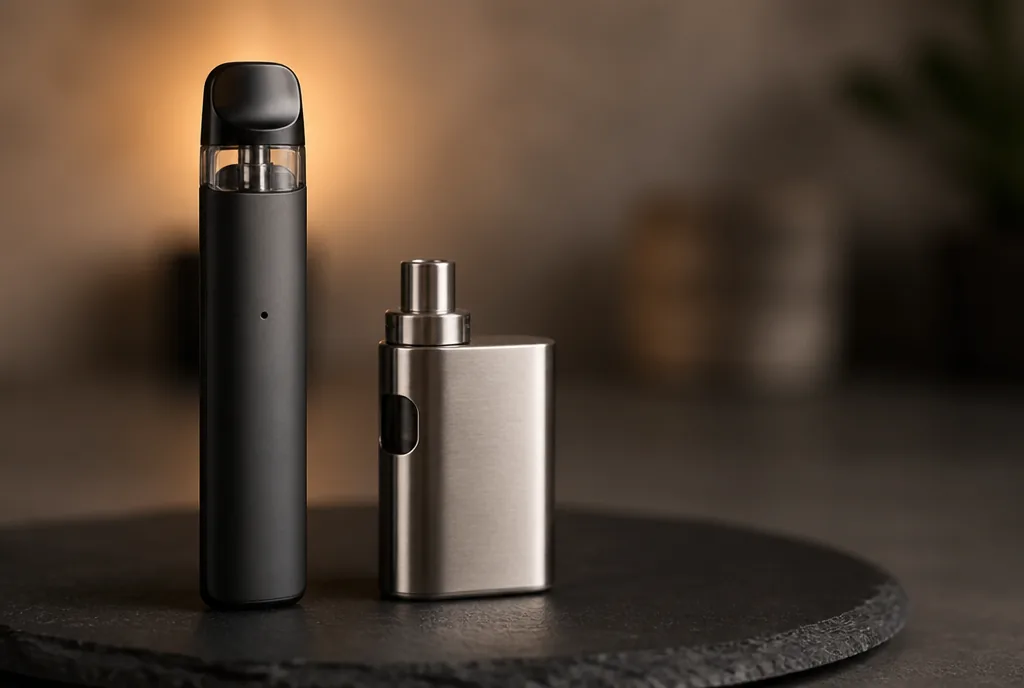
02 Best e-cigarette: how to actually decide
Not another top ten: the four knockout criteria that identify the best e-cigarette for your own use, plus a straight verdict by user profile.
 03
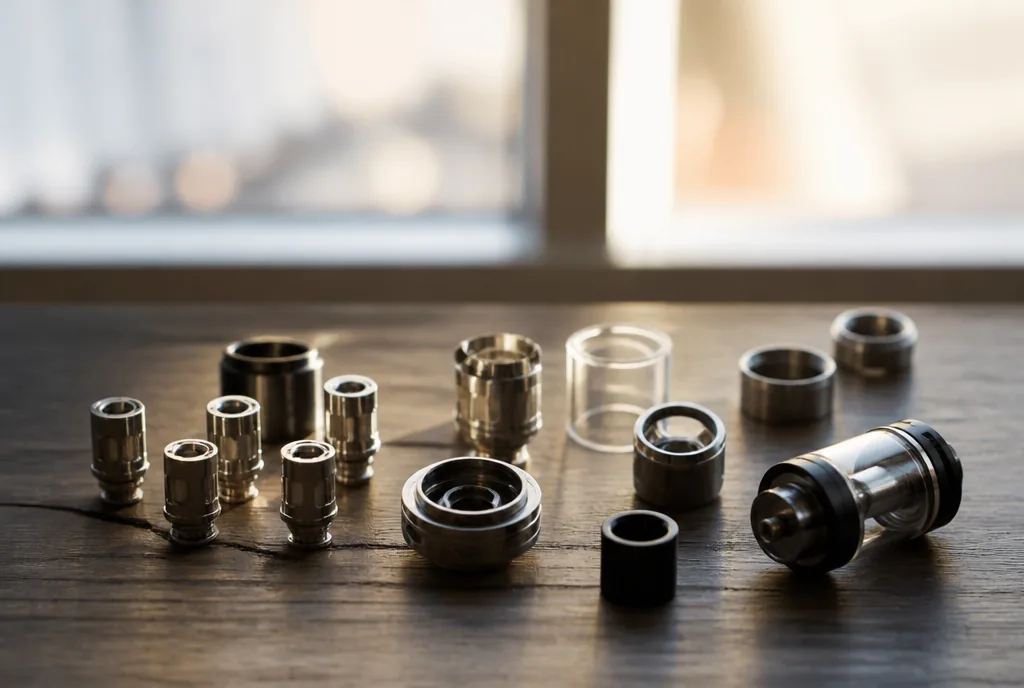
03 When to change your vape coil: the real signs
Forget the one to two week average: the four signals that say when to change your vape coil, and the method for measuring your own rhythm.