When to change your vape coil: the real signs
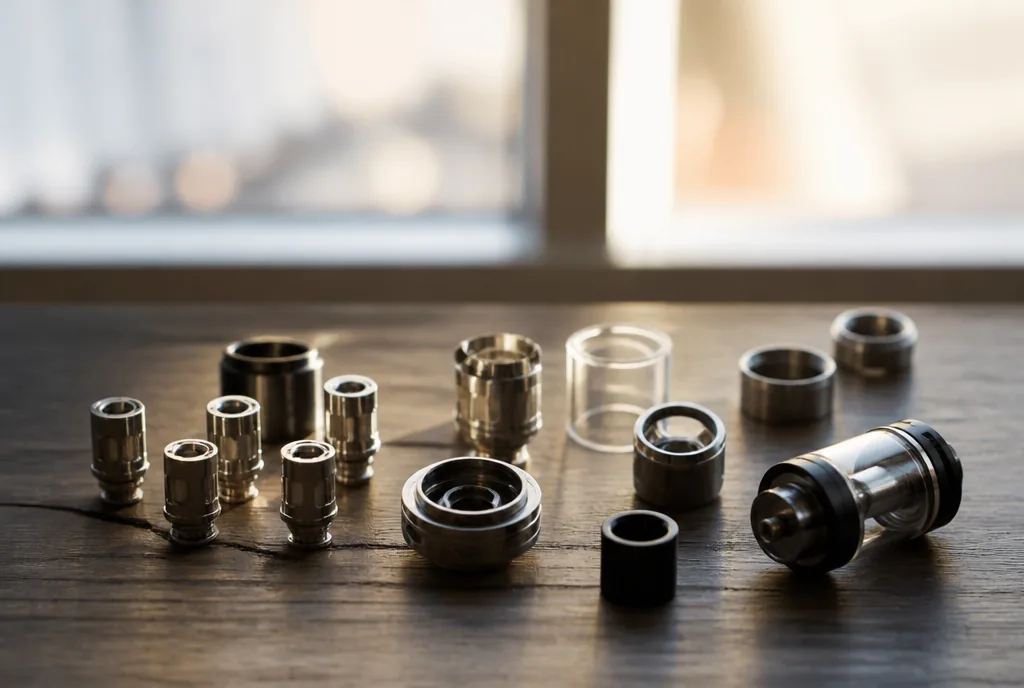
One week, two weeks, three weeks. Every British guide gives a different figure, and all of them are right about somebody whose use is not yours. Knowing when to replace a vape coil is not read off a calendar, it is read in four specific signals. Once you can spot them, you stop binning coils that still had life in them and stop enduring the ones that died days ago.
The signal that settles it
Change the coil as soon as the flavour goes flat or faintly acrid while the tank is full and the hardware is clean. That is the only reliable indicator, and it always arrives before the burnt taste does.
The burnt taste is too late by definition. By the time it appears the cotton is already carbonised and the part is scrap. Aiming at the loss of flavour instead lets you change at the right moment, without waste and without suffering.
This is where the standard British advice falls down. The commonly quoted one to two weeks describes an average across every possible bottle, every possible power setting and every possible frequency of use. It is not wrong, it is simply not about you.
Four signals to watch on a vape coil
A coil does not fail all at once. It sends warnings in a fairly consistent order, and recognising them saves you from replacing parts blind. Run through them before concluding that the coil is the culprit.
Flavour fades first. The bottle loses its fine top notes, then turns neutral. If a fresh bottle does not bring the taste back, the part is at the end of its life and nothing will revive it.
Vapour drops at unchanged settings next. At identical wattage with a full tank, a falling vapour volume means the wire is coated in residue that insulates it from the liquid around it.
The draw then gets harder. Deposits gradually obstruct the airflow holes and the liquid feed slots, so the inhale takes noticeably more effort than it did on day one.
Finally, small amounts of liquid start coming back up. A saturated wick stops absorbing, the liquid stays on the surface and rises through the mouthpiece, usually with a gurgle behind it.
What wears a coil faster than average
Two people with identical hardware can be on completely different replacement rhythms. The factors are known, and most of them are within your control.
Heavily sweetened and strongly flavoured bottles leave caramelised deposits on the wire. Those are the single biggest accelerator of wear, well ahead of how often you vape. The very sweet dessert and sherbet profiles that sell so well in Britain are exactly the ones that shorten coil life the most.
Thick, high glycerine liquids saturate a fine wick slowly and create invisible dry patches. Vaping below the minimum mark on the tank produces the same effect, only worse and faster.
Excess power completes the picture. Every watt beyond the range printed on the coil shortens its life without improving flavour, and on a 2 ml tank you notice the consumption before you notice the wear.
The method for measuring your own rhythm
No published average will ever replace a measurement taken in your own hands. The protocol runs to three lines and gives you a usable result inside a month.
Write down the fitting date of each new coil and the number of 10 ml bottles you get through before you change it. After three coils you have a lifespan expressed in millilitres vaped, not in days.
That unit is far more reliable than a number of weeks, because it absorbs your frequency of use automatically. It also lets you compare two bottles honestly: a very sweet flavour will drag the figure down visibly, and you will see it in the numbers rather than guess at it.
This is rarely mentioned anywhere, yet it turns consumable management into a personal, stable piece of data you can actually plan around.
Stretching the life of a vape coil without tinkering
A handful of simple habits push the deadline back, with no disassembly and no special products involved.
- Prime every new coil and wait ten minutes after filling.
- Stay inside the wattage range printed on the coil.
- Never vape below the minimum mark on the tank.
- Alternate very sweet flavours with plainer profiles.
- Rinse the tank under warm water once a week.
The bottle matters more than all the rest combined. Matching the ratio of your e-liquid to the ohm value of the coil is the most effective single measure for spacing out changes.
Stock coils and rebuildables: two kinds of wear
Not every coil ages the same way, and the replacement question is not even framed in the same terms depending on the build.
On a stock coil, the wire and the cotton form a sealed unit. When the cotton saturates, the whole part goes in the bin even though the wire itself is perfectly sound. That covers virtually every pod and tank sold on the British high street.
On a rebuildable, the two elements are separate. The cotton is replaced in a few minutes while the wire is dry burned and reused several times over. The question becomes when to change the cotton, not when to change the coil.
That difference explains the wide gaps in rhythm you see quoted between vapers. Someone on a rebuildable rewicks every two or three days at negligible cost, whereas replacing a stock coil at the same pace would become an expensive habit very quickly.
Diagnosing before you replace
Before concluding that the part is dead, three quick checks avoid a pointless replacement. They take under a minute and settle a good share of cases.
Check the liquid level first, because below the minimum mark the symptom is identical to a worn coil. Then check that the contacts between the coil and the battery are clean, since a film of liquid there creates a false power reading.
Finally look at the wattage on screen. A setting nudged up by accident in a pocket produces an acrid taste on a perfectly healthy coil. If all three are sound and the flavour is still flat, the diagnosis is confirmed.
Cleaning a coil: the honest answer
Rinsing a stock coil under warm water removes part of the deposits and can restore a little flavour, once, occasionally twice. It then has to dry completely, which takes twenty four hours at the very least.
The gain stays marginal and the downtime is significant. On a shop bought coil, replacement is simply the more rational move. Cleaning keeps its full meaning on a rebuildable, where only the cotton is replaced and the wire genuinely benefits.
Frequently asked questions
Is a new coil that tastes burnt faulty?
Rarely. In the vast majority of cases the priming was insufficient, or the first draw came too soon after filling. The part is unrecoverable at that point.
Can I keep spare coils in stock for a long time?
Yes, in their original packaging and away from damp. Dry cotton does not degrade over time in any meaningful way.
Should I change the coil when I change flavour?
Not systematically. A tank rinse is enough between two close profiles. A change is worth it between a strong menthol and a dessert flavour.
Does the colour of the cotton show the end of life?
Browned cotton is not necessarily dead. It is the combination of dark cotton and falling flavour that confirms the diagnosis.
Does lower power make a coil last longer?
Yes, provided you stay inside the stated range. Vaping at the bottom of that range reduces deposits and lengthens life appreciably.
The marker worth keeping in mind
To know when to change a vape coil, ignore the calendar and follow the flavour. Note your fitting dates and the millilitres you get through, and within a month you will hold a personal rhythm far more trustworthy than any published average, plus an immediate read on which bottles cost you dearly in consumables.
That kind of simple measurement is what separates hardware you put up with from hardware you control. It also feeds directly into the next purchase, since coil cost over a year is one of the four filters in our grid for the best e-cigarette, and the habits behind it are set in the first week covered in our guide to vaping for beginners.
Editorial content for adult readers only. Vaping products usually contain nicotine, a substance that causes addiction. Not for sale to under-18s in the United Kingdom. This article is not a buying recommendation.
Also on the site
Aspire PockeX: the guide to a good start
Aspire PockeX: what the Pocket AIO actually does, picking between the 0.6 and 1.2 ohm coil, the right bottle and a first fill without a burnt hit.
 02
02 How to choose a vape: four questions is enough
How to choose a vape without losing an evening: a four question decision tree, a verdict for each answer, and the traps to dodge in the shop.
 03
03 Vaping for beginners: getting week one right
Vaping for beginners in the UK: the kit worth aiming for, the five mistakes of the first days, and the week one routine that saves your coils.